Sometimes a rug is not just a rug. It’s like a living memory that has spread over the earth, a memory that has memories of the previous home and is recording current home events. In Mary’s house and Muhammad al-Madiq, a great rug of cloth is of the same genus, a rug that not only fills the space, but also keeps a part of the memories of his owners.. The story begins where the rug was not in the house. Before that, the house lived with other rugs, the carpets they were, but they had little. The house was a perfect house: his belongings came from the heart of the families, every piece of souvenir, every object had a past. But with all of these, there was nothing in the whole picture. A hidden kind of inconsistency, which may be called "preservation" later.. Mohammad Hussein, the architect himself, said he had no connection with classical carpets and busy designs. He knows these types of rugs too much; carpets that weigh it instead of accompanying space and do not allow breathing to the environment. In his experience, however, he had come to the idea that he was more important than the role and design: the color balance and the relaxation that a space should have.. He learned from this rug in his sister’s house; a different rug with colors that were neither crowded nor neutral, but in a coordinated mix, and the same colour was one of the most important and influential points; colors that were synchronized with the air of the house. These qualities were enough to attract the attention of Muhammad al-Malaam al-Malaam all those years at his sister’s house.. Mary had been enamored in her home before she was born. Especially at parties with which this rug took her look more than anything else. For him, this choice was not merely a momentous decision, but a continuation of the sense that was made up of childhood in his mind; a sense of life and presence in space. The same experience eventually decided to bring this rug home.. Maryam Mirhani said from that moment that the rug first spreads home. Not as an ornamental choice, but as something that happened. He speaks of an interesting conflict: a house that seemed perfect before, but with the arrival of this rug, something was stabilized. Not change, but everything is in place.. In the narrative of this house, the rug is more than the role and color. It is a biological experience. What is tied to everyday life. In normal days, at parties, in commutes, and even in difficult and difficult days.. Maryam Mirini points to a moment that seems simple at first sight, but remains in his memory; the days of war and anxiety, the days when the mind was involved in the news and external pressures. In those days, the mornings that woke up were the first thing to look at, the colors of this rug. This peaceful and unrecognized presence on Earth, among which anxiety created a real kind of relaxation, which was more like a long pause in the heavy days..
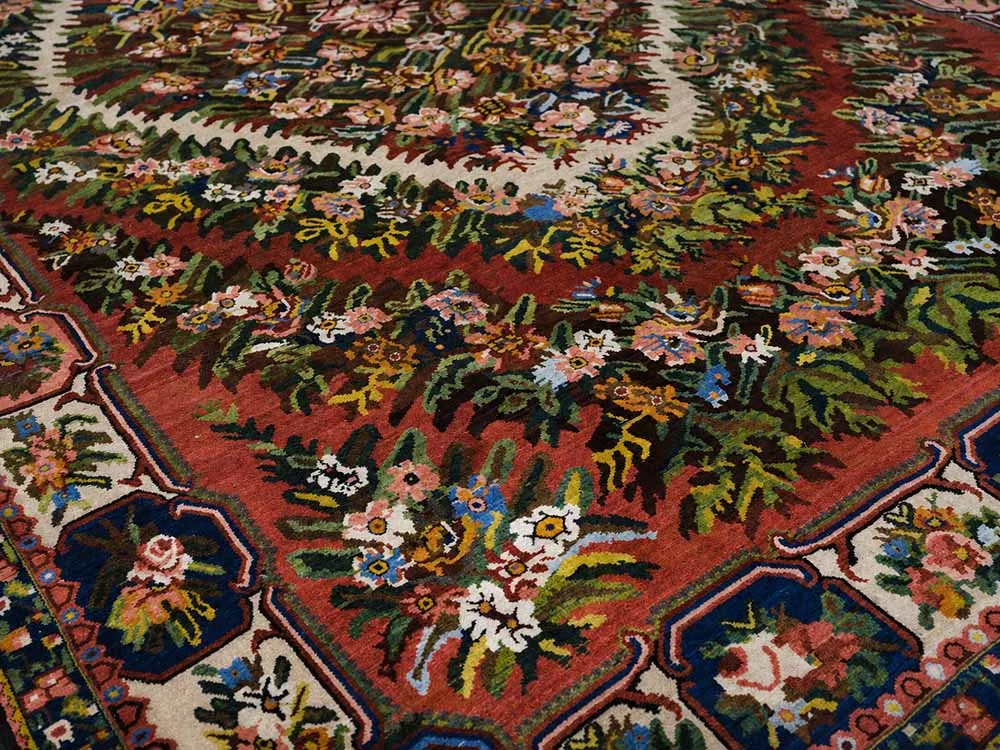
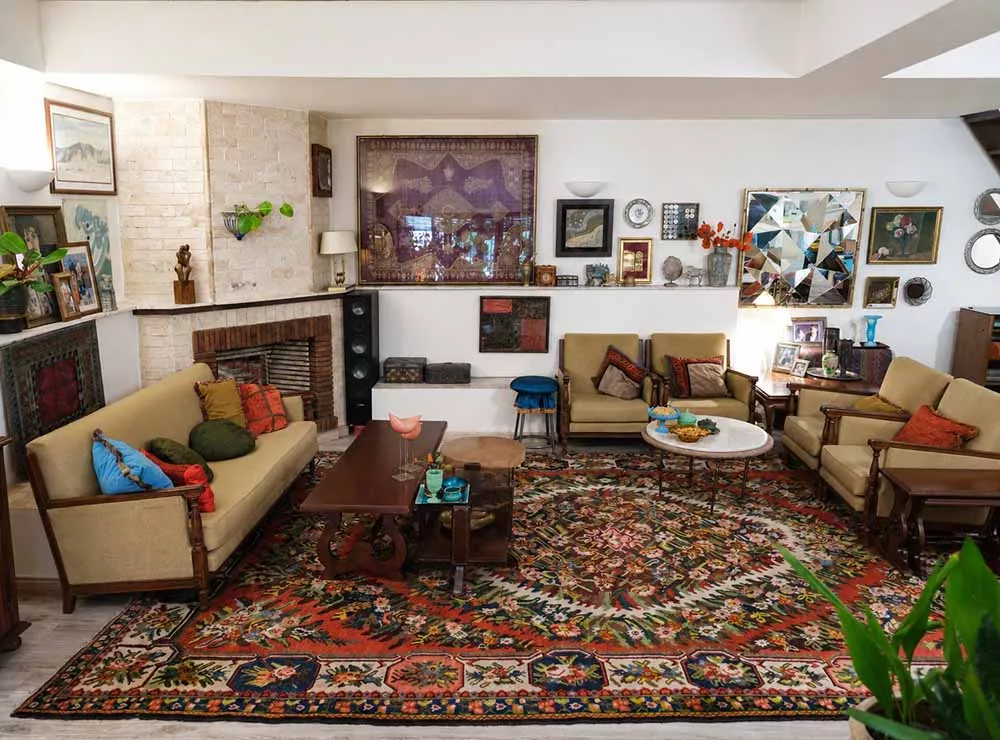
A: From the house of Mary and Muhammad al-Madiq al-Baqwa. In this house, the carpet is visible. What might seem obvious, but in practice, changes the direction of the look. Mohammad Al-Malaam points to a point that is less concerned about in many homes today: how an element at home can bring a look at walls. When the rug finds a stronger presence, the look is no longer just going to the murals and murals; it returns to the surface of life. Where life really happens.. This change is not simple. There is a shift in space perception. A house in which the look is always up will find a demo, but a house that returns to Earth seems more real. This is a role in this house: restoring the look where life goes.. But perhaps the most important part of this narrative is to sit down with the life of this family. Maryam Mirhani and Mohammad Al-Malaam both have come from families whose home objects are not merely devices, but also memories, from an old closet to a sofa or a frame that each has a part of their family history. In such a space, the arrival of this rug is not the addition of an object, but the formation of a new layer of memory; a presence that has not been replaced, but sitting next to the rest of the elements of the house and built a quiet retreat instead of conflict.. One thing is repeated: that some things cannot be explained only by conscious choice. Part of them returns to childhood experiences, to what we have seen without analyzing them. To the spaces we have grown up in, in the colors we love without reason, in the forms that are recorded in our minds without understanding.. The choice of this is the result of this common sense in Mary’s mind and Muhammad al-Madiq.. Perhaps that’s why some carpets, after years, are no longer just an object in the home, part of the memory.. A memory that comes from home to another home and still records life in an uninterrupted way.[1] 2 and 3: Another view of the 80-year-old Imam Khomeini at Mary's house and Muhammad al-Mallam [1]If your house has a story, share it with us..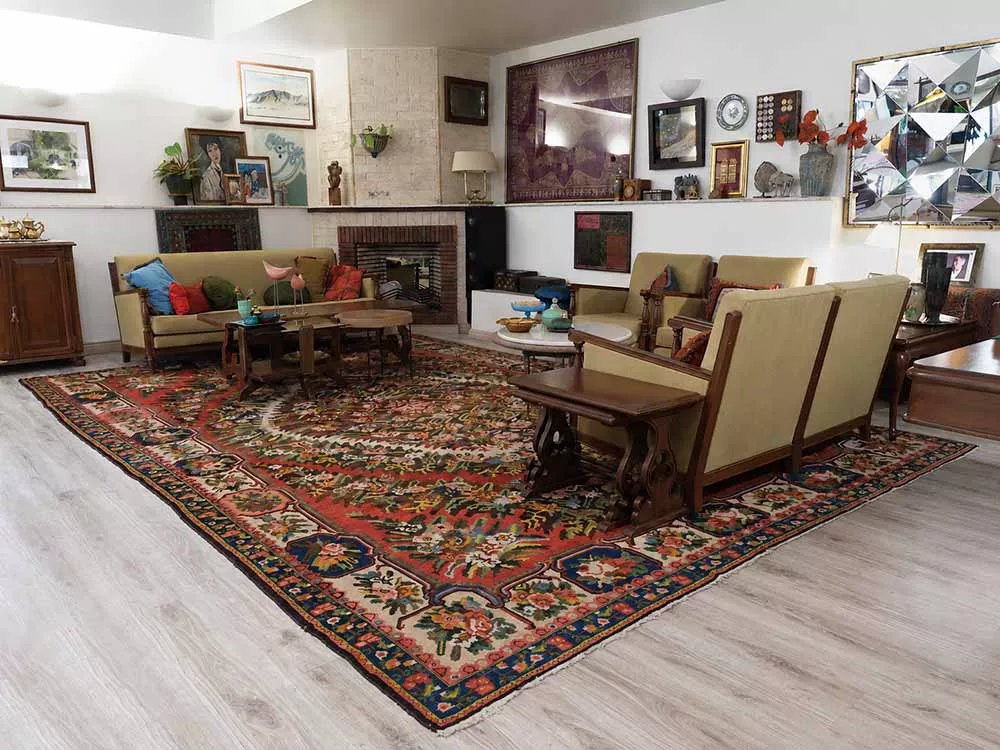
User comments
0 Comment
Post your comment