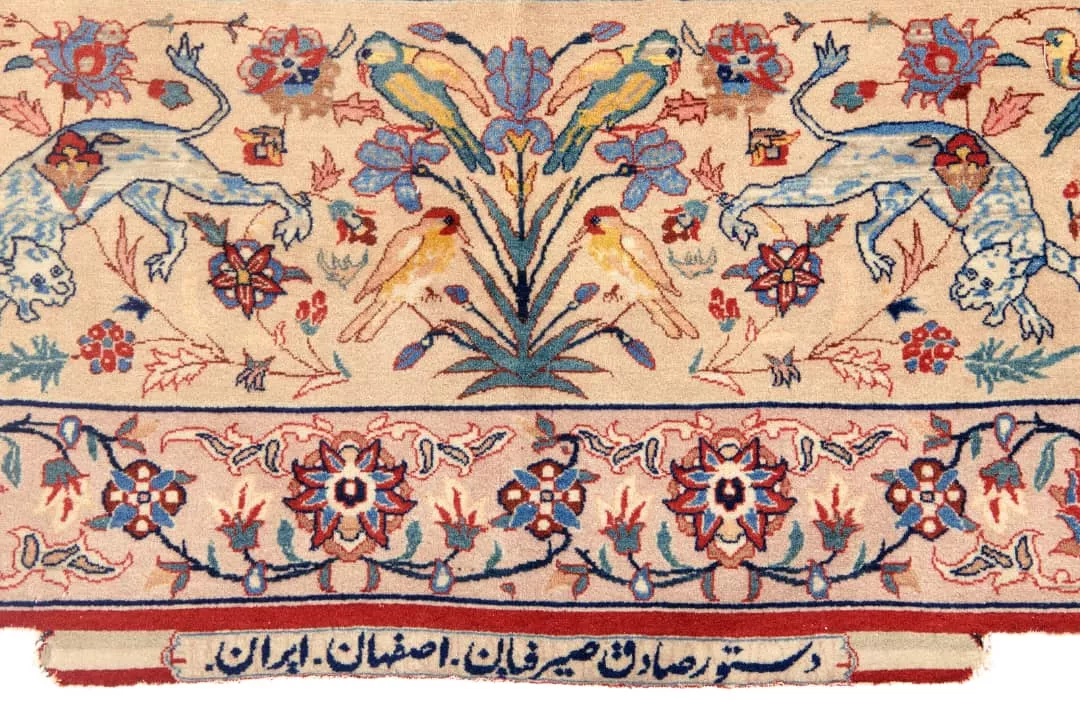
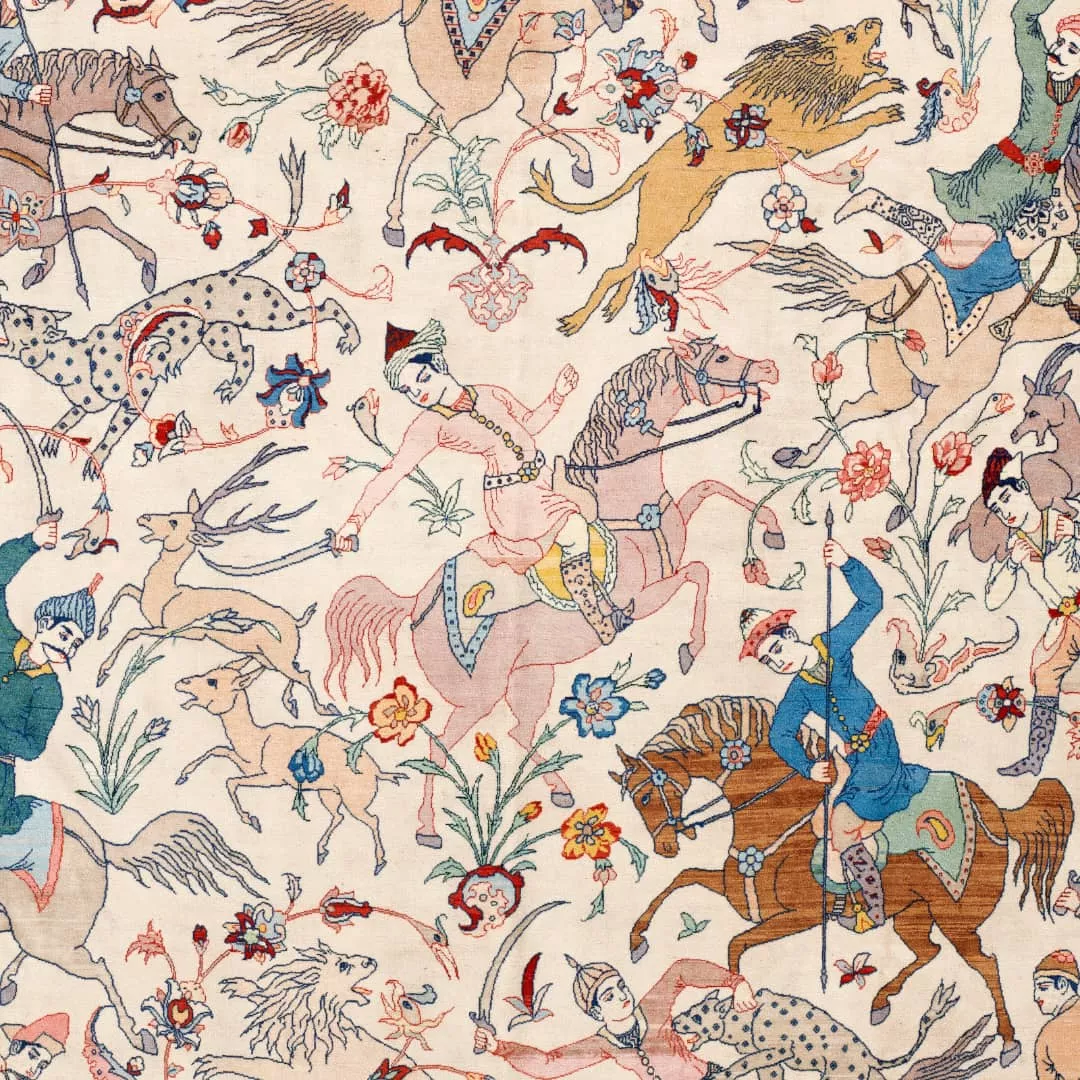
If we consider it an act of gravity, neither judgment is merely a pleasure, nor a poetic or philosophical expression of the matter.Cash, before everything, is an attempt to understand the effect, recognize the characteristic.They and why it works.It can be important for art audiences in modern history. And contemporary art, this understanding has always been formed in a direct proportion to the art market, an institution that bases the effect in the social world.And wait for that horizon.He is the one who makes it easy to judge.The art market, unlike the common imagination, is not merely an economic exchange field, but one of the fields of the field.There are indications in which art is defined, described and evaluated.and shall be judged.How do you see an effect?What awaits him?And what is the foundation of value?They are investing.It depends largely on its position in this economic field.
The art market.One of the active mechanisms in shape.Taste and stabilize value standards.In this space, they knew no works.Only supply and exchange, but class.He compares and judges.And they will make a distinction between them.«outstanding.»and«Normal normal.»,«original.»and«repetitive.»made.In the market, what is seen, interpreted and traded.and to,browsing.«Standard standard standard.»It turns.and to the taste.audiences, critics and even artists work.Leave the choice.Buyers toThen the waiting horizon is set.And they will give to the producers.This way, the market is not only the place of sale, but also one of the active mechanisms in the form of a sale.Look at the waiting horizon of the audience and the field of shape.Taste of taste.It is collective. In this case, with light.Coordinating the coordinates of the effect, its goals and its criteria.Those who eat.power based on it.About them.The value of the work said.He had a clear story, and he had a great deal.and both.Time in shape.and orientation.You also interfere with taste.slow experience.Historical shows.He gives cash everywhere.The art market is also transparent.more and more accessible.Understanding.It is more and more enjoyable.audience from the preferred level.Personal to the level of arbitration.They have been promoted, not because the critic determines the price of the effect.Rather, because cash is explained.The value,Specialities, goals and achievements of an effect provide rational judgment and informed differentiation.Without this explanation, the judgment.They are inevitable.crude, reputation or economic power.and value standards.They remain vague.As in this view, cash is not against the market, but one of its regulatory tools and one of the factors of shape.and taste.Art is a tool that helps the audience, buyer, and even the seller of the artwork.Find out what is being exchanged and why it is considered worth.It becomes. The Iranian rug, despite its historic and artistic position, has been less of such an explanation in contemporary times.Contemporary Praises in Iran’s hand-made rug, or to the general admiration of the past.Or at the level of description of materials and techniques stopped.And they are,And that it.And they make it clear.In what context.produced.What goals they pursue.How and how they should be understood in today’s time and market.And the carpet,Especially in sample.Finally, in the contemporary market it appears vaguely.And it is based on this or more.From the myth.O and historical, or moreHe finds a commodity. From the perspective of rational critique, the necessity of hand-made rug cash in the time of time.We are not the defense of tradition, not expression of history, nor opposition to the market, but transparently.Creating a contemporary rug position in the network.One of the meanings, traditions, history.Art institutions, value mechanisms.Investing and economic relations are networks.And the one in which theTime to Time.As a beautiful object, cultural goods, national identity bearer and the subject of the undergraduate discourse, we understand.In this framework, cash is tasked to show where the contemporary rug is located.How and how to get between this layer.Meaning and value of production.If Iranian carpets are to be in the contemporary domestic and global marketplace.It should be understood first.How it works, how it works.What distinguishes it from other similar objects.This is a reminder of this.As a tool for understanding and then judgment.and judgment;Without it, there is no fair market, not a precious rug. Art critique and the art market: theoretical and historical framework. One question.Fundamentals in understanding the importance and functions of artistic critique are why artistic critique was formed and what role it plays in the art market.Answering this question requires understanding of institutional processes that transformed art from a private and noble phenomenon to a social and economic product.power apart from social and economic structures.You know that creating and receiving art in the contemporary world may be possible.Make cash from one.So, in beautiful analysis.cognitive effect.On the other hand, in relation to the market, it explains its symbolic value and economic value.This ratio, today, discusses many theories.Reviewers, Economics of Art and SocietyFrom this perspective, the art market is not just an economic exchange arena but also an area of economic exchange.It is worth it.Art and symbolic works in that shape.It is, it reproduces,and to be fixed.So the network.Review and the art market, not two areas.separate, but two layers.and the gloom.It is the social field of art.And they shape each other.They reproduce and reproduce.They will. Harrison and Cynthia White, SocietyAmerican scientists, in their classic book,«Boomer.Professionals and professionals.Henry: Institutional developments in the French painting world»showing,In the 19th century in France, social and economic changes eventually lead to the transformation of traditional structures of value.He created the art of the world, and he created modern art.shows.By the rise of the urban middle class and the rise of the number of artists, the traditional system of the culture of painting and sculpture of Paris (up to 1684), an institution that educates, manufactures, displays and values.He had made the works exclusive,They were powerless and gradually replaced by the dealer system.–In the traditional system of cultures, art within the framework of formal support, professional education.O and the show ofHe leads,The value of the work was determined by the official arbitrators.Then the writers showed up.They say that the culture of the world is infinitely.Pay attention to the social and economic conditions of his time, power and legitimacy, and gave his place to a new artistic distribution system where the role of prominent dealers and critics.It became more. In this new system, brokers, by creating public markets sales and critics by producing interpretive speech, worked together to produce value for works and by shaping audiences, new markets and career path.“O artists, they have opened the door.Meaning of value standards beyond taste.individual and explain the location of the effect on the network.Social and economic form and became part of the art market mechanism, which explains the symbolic position of the work.It gives and allows the market.He gave value based on understandable and understandable criteria.(White & White, 1966)In the dealer system.–Critics, dealers, not only sellers of works, but also cultural mediators.They help market development.And the critics also raise the idea.Explain the theory.and teaching, capital.The culture needed to consume art.They make this process.In order for middle-class buyers, who had no effective presence in the art market, to become active market actors. To fully understand the ratio between artistic critique and the art market, in addition to perspectiveCommunity communities.Cognitive as Harrison and Cynthia White investigatedThey need it in the framework of theory.We also have economic resources.The Art and Economy of Culture has shownThe value of artworks and cultural goods is purely attributed to the feature.Technical or material effects are not limited, but rather the symbolic value of the effect that is formed among different market actors, including buyers, critics, institutions and institutional structures.It is important, too. Theory of theory.Between this and the market,And they are a part of the division.Inevitability between symbolic value and the economic value of the artworkFor example, Isabella Grosso in the book.«Price: Art in the Middle EastMarket and Culture reputation»shows.The economic value of an artwork is largely based on symbolic value through discourse.Special art forms.The discourse,Henry's critique is one of the most important.The most example.Those of them.In terms of Grosso, today’s art market is more than ever involved in determining the value of art, but this intervention does not mean the reduction of art to a conventional commodity, but also represents a complex ratio of art.It is a place between symbolic value and the value of the market, because the art in his sight is an exceptional and unparalleled commodity.In his expression, the price and economic position of the effect are largely based on the signal.shape.It takes art professionals, including critics, art historians and theory.Through analysis, narrative and interpretation.In other words, they do not market.It can be without creating symbolic value by this discourse.There is no magic, and there is no magic.As a factor outside of the market, but rather astitle of one partnership.Main participants in shape.The value that the market makes.role.Create a creation.slow.(Graw, 2009). Some research.Economics also emphasises.They are in the art market.«Quality quality.»and«value.»No works before.available, but the product of judgement.There are many judgments; judgment.networks thatA critic, gallery.Experts, experts, sets.The owners and buyers share it.Buyers are not purely personal and natural, but also in interactions with cash speech, display.And the signs and stories.Bachelor's form.And it is refined and refined.the quality of the effect.title.O thou who dwells,It comes from the heart of these interactions.and then at the cost of the market.Accept legitimacy.From this perspective, the symbolic value and economic value of the effect are not two areas.separately, but the component.And they are the ones.And he was killed.They are in the process of shape.And the judgment and judgment.And they have a role in it, because it is in the face of it.Measure and explain the differences,Taste of taste.rational and rational.More choice.Helps.slow. This is the case with what research is.History of contemporary art shows.It is also consistent with critics in shape.Giving public perception and taste and explaining the value and importance of works not only helps the audience.They understand the effect, but also the market space.In this view, critics build.Title.Between artists, buyers, institutions and the general public.And they will,They recognize art trends.They lead the buyer’s population.And finally, the symbolic value of capital.Culture turns.The market is based on it.and the price determines.It becomes. In the framework of such a ratio, artistic critique is not only a response to the market, but also one of the factors of market production and stabilization.as the dealer system.–The critic in France of the 19th century made it worth painting.Modern and modern,Capital title.Symbol and economic forms are formed in the contemporary period of speech and place.Show and sales (such as gallery)Shows, exhibitions.and auctions.) toThe title of structures works.They value it.It strengthens cultural and symbolically.That relationship.complex, show.While the art market has an economic role, it is worth it.It is produced in the social and symbolic context.Art critique plays a central role in this process.slow. Therefore, from a theoretical and historical combined perspective, artistic critique is within the field of art and is linked to market structures.As a symbolic process, it helps the market.to make value.It shapes dialogues and rational arbitration criteria for artworks, and the market is also the arena.That is the value.Not just read and interpret.Rather, they are in the form of price, demand and social status.Such a complex relationship.It provides the field to understand contemporary art markets, including Iran’s contemporary handmade rug market.Where the cash and value of the market comes in a complex conversation.and the value of the carpet.Not only as economic goods, but also toThe title of cultural and social symbol stabilizes.They will. This critical look.–Economic to art.It can.Special for the expansion of Iran’s contemporary hand-made rug market, the hand-made rug markets from this perspective, not just trading spaces, but also the field of Iran’s contemporary handmade carpets.They are symbolic symbols that they are.They can cash and evaluate works, educate buyers and value aesthetically, cultural and ultimately economic carpets.Create the art, meaning clearly.Features.The field,Creation and symbolic position of a hand-made rug in such a marketplace.It can be a judgment of wisdom and understanding.He will help him more than his judgment.In this framework, Iran’s contemporary rug is bound to avoid the monopoly of traditional trade-based markets and to new art markets, such as auctions, such as auctions.and gallery.They move, the spaces in which.legitimacy of the effect through criticism, history.← Expert Dialogue and DialogueIt will be a great reminder of the truth.It can help stabilize these emerging markets and promote Iran’s contemporary hand-made rug from a purely functional commodity to a position in the field of global art. The sale of an honest hunting carpet with the design of Muhammad Hussein Al-Queen in 2023 at Christie’s auction (image 1)power sample.One of these new markets is based on cash speech, a market in which it does not work.As a great commodity, but asTitle for Historical and Style InterpretingHe is offering advice.It becomes. The rug, which was introduced by an estimated £25 to 35,000, eventually fell for £44,100, a figure that shows.The value mechanism.It’s not just old, but on the network.One of the signs.Ha, of the tribe of Zionian workshop, is based on the idea of revival of Iranian art to link to the Safavid tradition. In this context, the catalogue provided by Christies auction plays a critical text role.through that originality, technical quality and historical position of the effect of the face.They are counting.and capital.Its symbol added.That's coming.They sell this.Ability to sign.A form of shape.Market measurement knew that specialized critiques and discourse were directly involved in the production and strengthening of the economic value of contemporary Iranian handmade rugs. Image 1: Hunting carpet, Isfahan, the texture of the honest workshop, the design of Muhammad Hussein’s Al-Queen,christies.com) Book of Book Book.Bachelor and shape.Iran’s hand-made rug market in the century Europe1919AD. Also, too.Time with shape.Measure and expand the floor.The average emerging city in Europe in the 19th century was a new market for Iranian handmade carpets, which transformed these eastern objects into part of the culture of artistic consumption.Power is merely the result.Trade expansion or developmentcarrying.And he knew that, too.Time with shape.Take some kind.«Bachelor of Knowledge.»About aboutThe rug.It was Iranian-made hands-on consumption.The participants.Learn how to see, how to distinguish, and how to judge, if in modern painting, Harrison and Cynthia White, artistic critique of forms.Public art market is possible.He accepted it.(White & White, 1966)In the field,A hand-made carpet, also a master's, catalog.exhibition, travel.Books and books.Collections.They played a similar role:No, no.Only information aboutHistory of Iranian handmade rug, style, layout, color, technical features and regiontexture offers.They did, but a framework for value.by the carpet.They are.They built it. One of the milestones of this process, holding exhibitions.World in half.The second was the 19th century;Special exhibition of 1851 London where objects«eastern east.»Along with the industrial achievements of Europe, research shows.Historical shows.These events are not only the best for goods, but also a tool for education.Make beautiful distinctions.They were cognitive.(Greenhalgh, 1988). Iranian rug in this space, from an applied object or court to a court.«sample sample sample.Henry.»It has become the class.Compare, compare and evaluate.In other words, the exhibition.and with the signs.The field,Converting carpets to a topic for specialized look and knowledge-based judgment. In this period, the first bookSystems.and about.And the carpet.Eastern works were published, for example, the classic effect.Hanius Lesingwith title.«by the carpet.Ancient Middle East: Based on images and examplesThe original centuries.15th and 16th, drawn by Romanos Lesing»1877 And then the Book of Influence«Wilmole von was named rug.Near the Middle East»(1902) They were among the first works they tried.Design, style,Biology and class.The area area.O you,They are based on scientific standards. (Lessing, 1877; Bode, 1902)These texts combine images, technical description and historical analysis, some sort of kind.«Eye training.See seen.»ahead of him.Assuming.They both andTime produces it.They were singing accordingly.He taught him that he was in the middle.«original.»and«New new new.»,«City of town.»and«rural village.»,«court of court.»and«Market.»Make such a distinction.They walk directly to the market.and found on the price.It works.He left. At this time, merchants of the hand-made carpet have a role.The manufacturer had this knowledge in production, for example, the activity of Zigler in Iran and extensive exports.Iran’s hand-made rug shows to Europe and AmericaHow business and knowledge are taughtIn the twentieth century, Cecil Edwards’ book, Iran’s rug (193), was tied.The same tradition of the nineteenth century was formed and tried to present the history, technique and geography of texture in a coherent narrative (Edwards, 1368).No, no.The side, but the builder.The hierarchy.There were some places, such as the sanity, or the quran.as centres.«great.»They are fixed and others are fixed.Down below.They were more likely to be such a class.grading.In practice the price structure.Market preferences and preferences are shaped.He gave. From the perspective of society.Art, you know these texts.Part of production.«Capital capital.Cultural culture.»and«symbolic value.»He knew that Pierre Bordeau used to explain the mechanism of distinction and legitimacy in the field of art (Burma, 1905).Bachelor’s with TeachingLook at the look.and judgment,The recipient.Europe to«A knowledgeable buyer.»It turns.They were no longer merely a choice, but rather an act of knowledge and cultural distinction.He went here.Order, Iran’s hand-made rug market in Europe not only based on supply and demand, but also on the basis of supply and demand.Speeches.It was formed that produced and consolidated the symbolic value of the rug.They did. In this case, the image of a hand-made rug in painting.Westerners and its representation in the catalog.Henry magazines and magazines also helped strengthen Iran’s rug acquisition.title of sign.One of them.«originality.»,«old age.»and«Eastern art.»introduced.and in the house.European bourgeois stands.and the house.For those who are in the name of the Scriptures,«Full complete.»This was not a move from the court to the living room of the floor.Average European Union without intermediaryBachelor’s knowledge and network.Trades were not possible. from this view the value of such a commodity was made in the interaction between narrative, display and exchange. As a result, shape.Iran’s hand-made rug market in Europe in the 19th and early 20th century should alsoTime of the economic and knowledge process.Master's, exhibition.merchants and collections.network owners.And they created an Iranian rug.title title title.«Henry object.»It was defined, hierarchy.He found and entered the flow of capital.Give the rug market, like the modern painting market, without producing words of value.There were no signs of knowledge and knowledge.Market, but one of the founders.Those of them.They are the foundations that are auctioned today.Between theInternational and catalog.Specializations have persisted and provide the ground for the evaluation of Iranian contemporary carpets.slow. Revitation of the Qur’an and the form ofNew markets in Iran’s contemporary rug: the carpet for honest hunting at Christie’s auction. One sample.New comparisons between the master narrative, shape.Global markets and the manifestation of cultural value–Economy in Iranian handmade rugsThe ability to sell honest hunting carpets at Christie's auction in 2023.A contemporary Iranian handmade rug at auctionand sell,Traditionally by selling carpets.Historical and rare parts of the previous centuries are known.And the sign itself.Repentance.It is an important place in the market structure.The presence of this effect in such a niche is not merely a single event, but rather a single event.It can.A sign of opening.The new space for Iran’s contemporary handmade rug is called in the field of global art. In the decade.past, auction.as reliable markets.International mainly on the rug.And they had the right to do so, and that is,Historical, rare and old.by themselves.As a guarantee of value.But the supply and sale of a hand-made rug belonged to the mid-14th century in such a auction.A show.That is the measure.«Historical history.Being.»toloneliness is determined.It’s not compelling and has given its place to a combination of artistic quality, workshops identity, artist signature and bachelor’s narrative, in other words, the market is adopting the idea that the market is adopting the idea that the idea is that the market is being accepted.«Contemporary.»It doesn’t necessarily mean value, but it does.It can be in a new, artistic and capital context.Oh, yeah. From the theoretical point of view, this transformation will take place.Ability to sign.Expansion of the Market Square to the CourseHe knew where the border was between.«Magician.»and«Contemporary art.»in the field.The hand-made rug is re-defined.That is the same.In the history of painting, with modern market consolidation, the possibility of selling works of live or late artists (White & White, 1966(In the field,The hand-made rug also seems.Now the workshop.Contemporary indicators, togradually entering the network.legitimacy of legitimacy.The auction section.The first ones.This requires shape.Speeches that are technical, professional.You and the light.He explained these things and explained it.In the series.Global value is at this point where artistic critiques can play a role in creating value for a contemporary rug. the Christs narrative of this rug is a good example of analyzing the relationship between the master narrative and the market.Only the collection.technical information aboutIt is not a matter of fact, but a multi-layered narrative through which the object is objected.«artwork of art.»And the artwork of art.«Capital capital.culturally.–Economic economy.»It turns.This is a sign of a covenant.He has the right to do it: He is the only one.They, too, are old.And they make the way,They teach to see.And the way of the day, and the end of the day.Give it. Hand-made rug discussed in the catalogue provided by Christies auction as referred to as hand-made rugs.«Isfahan, the sincere signature of the Zionists, Central Iran, around 1940»It was introduced and released at £25 to 35,000, and eventually it was hammered for £44,100.Between the initial estimate and the final price.Ability to sign.A measure of value.He knew what he was doing, and he didn’t understand.One on the market, but part of the production infrastructure of value, in the first layer, the catalog is to stabilize the authenticity and certification of value.Daring works.Note: sign.«The command of the Iranian people.»The approximate history of tissue, production location, and even the number of votes are not merely technical description, but rather part of the institutional process.The impact on the market field is achieved through this specialized discourse on the network.A professional credit.O, the standard of quality and comparability.and this,Sun for exchange at a level.International prepares.It becomes. layer layer.Second text provided, to build a professional.O you! (genealogy) The story of the foundation.In the last decade of the year, the1930 begins.And by the name of the generation.The next family continues.This is the only history.It is not family, but capital production.It is a symbol of what Bourdau is.title of capital accumulation.Culture in a field.In this framework, the workshop is not only a productive unit, but also an institutional owner.«New Standard of Quality»introduced.As the increasing density of nodes and the promotion of raw materials, it distinguishes itself from the average time of quality, in this narrative, to a low and measurable indicator.The measure turns.and from the field.taste.Someone goes beyond.Go. On the third level, text to beautiful analysis.I knew.and both.Time time.«Look at the look.»He trained the audience.by: Use of theابریشم ابریشم ، ،,and the ability to perform complex.More, all of them.species of species.And he said,They will make it clear that the design and implementation is.Detailed, unsoluble.A lack of weakness.in the corner.Avoiding large levels.Color color.Fast, exactly the same educational pattern reproduces the nineteenth-century texts.He said to the buyer.How to see and see. Finally, the interpreting section of the catalog, the honest carpet along the visual tradition of the period. They are appointed.and the scene.Hunting carpets continued. «Classical current.»Iranian art is introduced.slow this face.Simply describe style.It is not cognitive; it is a strategy of discourse to promote the status of the work; reference to the Safavid tradition, which is a sign in the history of Iranian art.It is a great, glorious, and glorious thing.And, in the present, it becomes a historical depth.He forgives it along one.«Course course.Gold gold.»Placed.In the logic of the culture economy, itAs David Bowby explains.The economic value of art once stabilizes.It is the effect that carries the layer.dense meaning and cultural narrative; and the master text is exactly this layer.He activates them.slow.(christies.com). On the other hand, this bond is associated with the tradition.power within the framework.«The resurrection.»In the Qur’an, he said, “In the sense of the Qur’an.”grading.Symmetrics and scenes.Hunting, inheriting yourself from the workshop.The royals of the Safavid eraIn this sense, the revival of the Safavid is not merely the reproduction of a historical style, but the reproduction of a legitimate system.Historically, Iranian art is in place.and the horizon of the receipt.It becomes. This is this.Before you enter the right place,You can say that the three main functions catalog.Time does.Provide: technical stability, production of capitalSymbol through the professional language.O, and place.Historical investment of the effect along the Safavid tradition is not the final price of £44,100.Power is merely the result.The supply and demand mechanism is known; it is the number of discourses that serve narrative, expertise and history to strengthen market value.Take it. Therefore, the sale of the hunting carpet at Christie's auction.Power is not just the success of a particular effect, but a sign.or to strengthen or«Iran’s contemporary hand-made rug market»He knew the market in which contemporary productions were created.Special works of workshops.Convinced artists and artists, again on the sidelines.The antique market.They are not, but rather.Part of the history of continuation.Found.Iranian hand-made rug art offers.They will be this shift.Somewhere, field.An important theory to examine the ratio between the revival of the Safavid, the identity of the workshop and the mechanism of value.It provides in contemporary hand-made rugs.and the field;The one that will continue will be analysed with a critical focus on this example. Resurgence to theas national discourse.A: The Magician. In fact, the right hunting is designed.Muhammad's Al-Khaliq. The hunt for Christie's auction is the product of the famous producers of Isfahan in the contemporary era, a workshop by Reza al-Sadiq.–1353.He was created in a deep way.He had art andSeriously, they’re collecting the carpet.maps and maps.The old ones paid.Targeted and accurate recognition of St.The original and conscious rebirth.He provided them in his workshop.Making the best materials and collaborations of designers and prominent vendors, producing carpetsHe started names.«And they are the ones.»Along with the flag.«Iran Iran»and title.«and Isfahan.»And on it.to them.It is a sign of quality and originality.(Five 2) This path in the next generation.In the hands of the righteous,–1383.by keeping the plan.Historical, at the same time, continued with innovation in design, and consolidated the location of the workshop in Iran’s contemporary hand-made rug.No, no, no.Alone.As a manufacturing unit, but asAs an effective reminder,They are known in modern times.It becomes. Image 2: The inscription of the hunting carpet, Isfahan, the texture of the honest workshop, the design of Mohammad Hussein Al-Queen, (Source:christies.com) At first glance, the carpet of Jesuits is placed in direct continuation of the tradition of the hunting design in Iran’s hand-made rug.and take andThe power of that sample.A reminder of the fact that he knew that when he turned away from him, he knew that he would be able to do so.And the flow that they are doing.The power of that movement.«Revitalization.»It was called the designer of the famous carpet and of the main elements of the Iranian revival in Isfahan.They are in this place.He writes:«But Isfahan has been able to investigate for the last hundred years, like all parts of Iran.So far, Isfahan has had designers who have changed the past hundred years to imitate the Safavid plans.They did.»17:17; but the recitation of the righteous.Old people are distinct. The revival movement in contemporary Iranian handmade rugsA conscious way to read and rejuvenate.Classics, toIn fact, he knew that he was in the middle of the day, and that he was in the right way.It is the magic of that period.Taking or rehab is not a historical example, but a creative redesign based on a creative design.The structural logic of the Safavid design.In this context, there are works such as the hunting of the priests, inspired by tradition.Previous image images, but with the redesign, change in detail and execution technique, translate tradition into today’s language.Therefore, revival in this sense is not a passive return to the past, but its active restoration in relation to the cultural, identity and even the art market.«It is an art killer; art must be necessary for its time and circumstances.Discipline and tradition.It means that it’s footing.Time goes, the shape.traditions and traditions.And the old ones that are hindering this.and worth.Find new ones that make him grow and develop, Iranian miniatureists...Rather than the tradition.and worth.The price of the past miniatures of Iran to find capacityfresh and open doors.Essentials toWork, close the way to your imagination and creativity, and from old black works.I have trouble.slow.»(Al-Qur’an, 47:13). compound composition.This is a great reminder of this.clarity of sample.And the great ones.The hunts are inspired.hunting, including the plan.The mains in Iranian visual culture are that first appear in the Safavid period on the rug.They will become a rug.The Museum of Pollypolis, the Vienna Museum of Applied Arts, the Boston Museum of Fine Arts and the Louvre Paris Museum, including the most important examples of carpets.Hunting is a period of time.Riders are hunting, mortars and companions, hunting tools such as arrows, spears and swords and animals in the landscape of nature are the most important elements of the hunting plan in which the rug is directly from the rug.Hunting sites of the Safavid period are adapted.to them.Clearly, the visual culture of the Safavid period.They are hats.and half, half,trunk.and feet.They are carefully described.They are weapons.and manners.Hunting,Repeat the same traditional patterns.And they will be like an example of the Lord.There are indications in the Qur’an, and the structure of the court strengthens the scene.They will be able to do so, and they will be able to do it.O thou who hast provided theThey are reminders of design structures.Classics. However, the current effect is not merely a reflection of a historical pattern, and it takes the rug away from imitation and close to the regenerative movement.The density of Roman elements is more impressive; the presence of fourteen riders, more than most examples.Classical traditions,to the scene.more and more show.He is more forgiving and merciful.Human and animal orientation are actuallyThere are more and more examples of symbolic land.Olds are far away.Take the face.They have a lively state in the sample.They are less visible.This is the fresh face.and tendency to describe accurately.The greater body and movement, the sign of a new look and shows.It moves on the border between renovating and innovation.(The picture 3 is this.)Ordering, although the plot of this rug is rooted in the Safavid tradition, in detail and how it is expressed, independent identity.It is not the identity of the past.as a reminder, but rather aTitle Review in Contemporary FaceThey are counting.slow. Image 3: The mode of bodies in hunting carpets, Isfahan, the texture of the righteous workshop, the design of Mohammad Hussein Al-Queen, (Source: christies.com) This is a reminder of the fact that they will be able to do so.He did not extend the cash at the level of the form analysis, but at the level of the discourse, an analytical approach not to the artwork.As an independent and self-sufficient object,title in construction.Inside the network.One of the meanings, power.and study institutions.In this framework,«Speeches.»They will.Ability of the collection.A word, meaning, value,The rules and rules knew in a period of time.A special historical setting.What they can do.Sayable,Seeing and visible.value.It is a discourse.They are not the only reflection of reality, but rather the social and cultural reality.They give us a clear understanding.So, they’re talking.Try to show how an effect is formed in the heart of these semantic structures, what narratives.They either reproduce or stabilize.How and how with institutions such as government, market, education and historyPoetry is bonded.The purpose of this type of critique is to go beyond the description of the form or praise of technical skill, but rather.He wants to reveal the hidden mechanisms of meaning and value.Only the product of the individual creative of a designer, Muhammad Hussein, or the skill of the workshop, was known within the network.One of the historical, cultural and political meanings is formed that the revival of Safavid art is its central point.«Revitalization.»Not a purely beautiful choice.Cognitive by artist, but part of the national discourse.The course.He is on his side. National discourse.in the course.They will take their side.Power of the project.A conscious way to restore and restore.«The magnificent Iran of the past.»toIt was known as the foundation of modern national identity.In that ancient history and period.Gold of Iranian Art,toand of thetoA selective face was highlighted to stabilize the historical continuation and grandeur of the Iranian nation. in this framework, traditional arts not merely cultural heritage, but also the tools of the identity discourse.They were at this time in politics.Cultural courses.Government with authority.Teaching traditional arts, supporting workshopsand emphasis on«Iranian origin.»They tried the past to capital.A symbol for legitimacy.Part turns to the modern government, returning to historical patterns in the art of spontaneous, but also part of a spontaneous movement.«Program program.Redefinition of national identity in historical form.–Beautiful recognition.»It was in that past glory.title of support.Modernization is introduced.It became.«Politics policy policy policy policy policy policyOn the first side, more than interested in painting Al-Queen, as modern art, showed interest in traditional arts such as carpets and art.Strengthen historical and nationalism.»(Mary, 76:1397) As a result, the resurgence of the Safavids in art such as the rug.It is possible to understand along this discourse: the reconstruction of the past image.A brilliant way to establish a coherent narrative of the modern Iranian nation and government. It was based on this discourse and the idea of the revival of the past that measures such as collecting the map.Old rugs and photographs of rugs.Iranian exquisite museums in museums outside the country in 1306, holding the first rug painting design contest in 1309 with the law of observing the old Sloan of each place and avoiding Western forms and using color.Vegetarians, carpet design training in the art of the beautiful arts of Tehran and Isfahan in 1315 by professors such as Jesus Bahaderie and the establishment of the Iranian rug Institute in 1309 with duties such as the preparation of a series of maps.The palms.Old IranIn the first period of the day (the Psalms 280:13889–295), in the framework of the national discourse, the sovereignty of traditional arts, especially carpets.They support Bobby.He founded Iran’s rug company in 1314 with the aim of preserving value.Traditional and reconstruction of the map.Fruits, company.Foreigners banned the production and trade of carpets. In the second period, concepts such as tradition.Meaning, authenticity.A return to himself was formed within the framework of this discourse and strengthened the idea of revival.«The concept of returning to itself in the official discourse of power, meaning returning to the authentic Iranian identity.It was in the resurrection of the tradition.and the knowledge of folk, rural and religious art.Found.»The reign of this era on the preservation of cultural heritage and the integration of the progressive world and value.The natives emphasis.He did that based on this.«A wave of the establishment of research and academic centers to register local customs and maintain and restore culture.There were ethnic groups, researchers,The academics and artists sought to restore Iran’s original and traditional culture.»(Mary, 95:138) The idea of revival of past art was also based on an economic necessity, historically the idea of restoring past art into the late Qajar era.Leila Diba in the article.«shape shape.Modern art of Iran.»to establish.«Islamic company.»In Isfahan in 1279, the company, which was the result of the collective will of merchants, the master of the industries and clergy of Isfahan, tried to prevent the reduction of demand for domestic productions and the loss of the sales market of the works and crafts of Isfahan.And these people were aware of this degree that the subtle works and industries of the people of Isfahan market demand and history.He has a long time and does not.It should allow foreign merchants to recession domestic production by importing their goods to the market, D.C. has a special accuracy to the word revival in the speech of the Al-Qaeda property and pre-preserved it.A genuine for the revival movement in the decade.The next ones.Know (the living heart, 139:14) During the first period of the idea was proposed by Arthur Ampe, a prominent Iranian art researcher, in the spring of 1304 in a speech against Reza Khan for the founding of the National Works Association of Iran, in his speech he emphasized the revival of art as a vital thing for the rebirth of Iranian political and economic works.(Diba,2013:49). In his view, the future of Iranian art was in the repetition of the art of his magnificent past, it seems that the speech had a profound impact on Reza Khan, because the politics of Iran’s politics seemed to have a profound impact on Reza Khan because of the politics of politics.The cultural arts that took place during the first period was in line with the idea that the establishment of the National Arts and Higher Arts of Iranian Arts in 1309 aimed at restoring and expanding ancient arts, including the architect and design of rugs with the presidency of Hosseinzadeh, including the most important important of the Iranian arts in 1309 with the aim of revival and expansion of the ancient arts, including the ancient art of the old art of the Persians.The most example.The idea of revival in cultural politics of this period. Hossein Tahirzadeh and his brother Karim are other important artists and thinkers of this era, who revive the traditional Iranian arts.They think of the book in the book.«The art of art.»In 1302, he published the idea of revival as a way to advance Iran’s future.He is in this book.«Iranian spirit.»as a shape factor.Iranian art teaches.He speaks of the necessity of restoring the genuine Iranian arts.He says he is looking at the market-oriented idea.Written by:«In China and Japan, the Minimization technology is also conservative and renewed.and this nation.Each year, he sent a large amount of pens to the oven and a large amount of money.They benefit.Brand.»According to this view, Iranian arts excellent art in education and production of major sectorsOne of the works of its artists has taken into account a market-oriented attitude and actually produces a great, but non-extraditional type of work.He said that he was in the direction of strengthening the market of handicrafts, in fact, many of the ancient masters of this fan, including Hussein to the miniature, contemporaries, and even the jani, all the year.From this unconventional market.He has done it.They are alive, 191:14–1999. in Isfahan.«In the year.After the old market.It was warmed and the works of the original or exchange in the Isfahan market were passionate buyers.Then he turned away from the city, and returned to the past.»(Providence, 101:400). He writes in his diary:«With the arrival of the miniature Qajar in Iran, the Shah of the Interior of the Interior of the Fine Arts of the country was opened and the painting of the obsolete Qajar style and the Safavid painting in Iran came to Iran, and the Safavid miniatures of the Peruvian clients found a pill.(Surely,19:13 Dba writes in his article:«In the midst of the two nations,There was no fear, no doubt, and no doubt.Indeed, there is a place of worship.They accepted academicism, Isfahan artists sought a national style and revival of art in the past instead of the Academy.Art training in the workshop.They do.It became the tradition of art and crafts.Dar in the course.He kept the Safavids and kept his business arts very much.You have wings.» (Diba, 2013:48). In this context, return to the period.And in history,official journalism.The title of the era of centralized government consolidation, the blossoming of court arts and cultural cohesionThere was a job of discourse-markets.Replicating the scene.Hunting, Slaim.They and mix.grading.Symmetrics, in fact, the representation of a representation.«Course course.Gold gold.»From the history of art, it is supposed to guarantee the historical continuity of the nation, and on the other hand, new markets for the contemporary hand-made rug of Iran.Not known, but metaphor.It is a national order, power and glory, so the revival of the Safavid in the contemporary handmade rug.The power of part of the project.The redefinition of national identity in the twentieth century, the project.In which traditional arts became a tool for the representation of historical grandeur, and a new strategy for marketing. From this point of view, patriarchy hunts are not an artist-oriented function in modern sense of the word designer’s name, designer name.Muhammad al-Baqir,Although it is important, the effect in the logic of production itself is a broad military function.More: The workshop system, politics.Official Cultures, Export Market and National DialogueDynamics.O you who«Iranian origin.»He will return to the past.At the same time, the social origin of such artists is also important in understanding this logic. illustrative images of the family.It was a tradition and artist behind the painter (Similar, 17:1387).It was professional, professional.O thou who dwells inMagicians and traditional arts were rooted, and his family's artistic ancestry was a period of time.And they have a relative.It was with this.Not all, even this traditional ancestry is due to the present.As an expression of individuality, but also within the framework of the reproduction of the ruling nationalist discourse.We don’t have personal innovation here, but somehow.A conscious way of understanding.We are the model that defines value in the restoration of historical glory.Thus, they will be able to re-enter this place.power of some kind.«Invention of St.»In modern sense, he knew it.The selective face is restored.To answer the identity needs of the time.Not the natural continuity of a live video language, but the conscious opening.Historical elements to produce a coherent picture of«Iran Iran»It is. From this point of view, the value of hand-made rugs is not merely in the technical subtlety or complexity of its design, but in its place.The title of a document from a moment.Historical: Moment.In which the art of the carpet becomes a tool for establishing the national narrative.Therefore, before any visual evaluation, it should be considered that the effect is formed within a structure that aims not to create a new visual language, but to replay past splendor in a consistent way with the identity needs and the global market of the twentieth century. relationship relationship relationship relationship.And they will find the magic of the earth.power toHe clearly observed that the value of the effect was not only produced from its material quality, but through narrative and interpretation.The arrival of this rug to Christie's auction in 2023 showed that the market between the market was between the market.International only on the carpet.The Hayes.«Magician.»It is not based, but is prepared to accept the contemporary handmade rug of Iran,If these works can be seen in a valid, aesthetic, conceptual, historical narrative.Especially in style.What happens in this auction.It’s not about describing an object, but building its place on the network.One of the things, professional.and the quality of the measure.In other words, the global market before buying an object makes its narrative.Wisdom. In the catalog of this auction, the emphasis on the continuation of the Safavid tradition and placing the effect along the patterns of the Safavid period is merely a reference point.It is not historical, but active.consciously.The idea. «The resurrection.»And the idea.And he who is a gold man.He creates a historical depth.From the perspective of discussion analysis, this reference to the Safavids is a legitimate strategy.Part: Pastand glory.to theThe title of the original name is called.To make the contemporary object in the hierarchy.The value of Iranian art in this process is to revitalize not only forms, but capital reproduction.It is symbolic; capital.You are the market.It can be capitalized.It becomes economic.Thus, the Qur’an in the catalog, the bridge between history and exchange.And, whatever it does,«Course course.Gold gold.»solid.more face.Its ability to enter the global market is also reinforced.In this sense, the resurgence of the covenant.Time is an identity discourse and a market mechanism. In such a situation, art is a part of a role.No one, or no one, but a part of the property.It turns.If cash can be used in relation to tradition, historical discourse, workshops system and beauty developments.cognitively explained, indeed the horizon of receiving it forms.It is possible to compare and scale.It provides it in the global field.Make it without this layer.Analytical, contemporary handmade rug, even with high technical quality, in the marketplace between the market.International toHard from the surface.«Excellent manual industry.»It goes beyond.It's the cash that goes it.«Effect.»It turns.A record that is a historical place, a light identity and capital.It is symbolic. Open the door.New markets for Iranian hand-made rugs,Especially in the auction bed.First, it also requires the production of specialized speech.The stone is with that market.as in the field.Modern painting and art, historyAnd he has a character.And they were in the hands of artists and schools,A hand-shaped rug.Contemporary market voting depends on the writing of analytical, documented and theoretical critiques, such a cash is neither advertised nor describing praise.but a mechanism for place.It is a military influence of concepts, traditions and distinctions. From this point of view, sales should be a sign.One possibility: the possibility of converting Iran’s contemporary hand-made rug into part of the live history.The realization of this possibility, more than anything, depends on the continuation of the production of critical knowledge, the knowledge that can provide the quality of the face.It makes clear distinctions, and between tradition, innovation and context.Social linking is only if the emerging market will not be based on a transitory wave, but on a theoretical and cultural basis. List of Sources: Edwards, Sicily (1368), Iran’s rug, the translation of Mahin de Sabah, Tehran: Culture Publishing. Bur cardio, old (1390s), distinction, social critique of hypnotic judgments, translation: Hassan Chasian, Tehran: Third. God’s grace and grace are in the presence of God.Iran, Tehran: side. Al-Ma’athiru’l-Qa-Qa-Qa (Job) of the [[Analysis]] of [[Ana]], [[Ana]], [[Analysis of Homsar]]. Living heart, Siamek, (1401), the visual transformation of Iranian art, critical review, Tehran: Press publication. In the month of Surah al-Malaam al-Qakh al-Malaam al-Malaam al-Qa al-Haqir al-Haqir al-Haqir al-Haqir al-Haqir al-Haqir al-Haqir al-Haqir al-Haqir al-Haqir al-Haqir al-Haqir al-Haqir al-Haqir al-Haqir al-Haqir al-Haqir al-Haqir al-Haqir al-Haqir al-Haqir al-Haqiq al-Haqir al-Haqiq al-Haqir al-Hahaqir al-Haqir al-Haqir al-Kahh al-Haqiq al-Haqir al-Haqiq al-Haqiq al-Haqiq al-Haqiq al-Hahaqir al-Haqiq al-Haqiq al-Haqiq al-Haqiq al-Haqiq al-Haqir al-Haqir al-Haqir al-Haq مری مری ، ،Cultural and current.Iranian Art: Kennedy in SocietyContemporary Iranian painting, Tehran: November, University of Art. (400), the painting of Isfahan, the four-century old and new companion, in the book: art, contemporary, Isfahan, income on contemporary art in Isfahan, group of writers, (1400) Isfahan: the cultural organization of the Isfahan municipality. Humfi, Benefi (1650), Al-Queen, a renowned professor of miniature 2, art and people, number 102. -Diba, Layla S (2013), The Formation of Modern Iranian Art”, Iran Modern, New York: Asia Society Museum, P: 45-65. - Graw, Isabelle (2009), High Price: Art Between the Market and Celebrity Culture. Sternberg Press. -Greenhalgh, Paul (1988), Ephemeral vistas: The Expositions Universelles, Great Exhibitions and World’s Fairs, 1851–1939, Manchester University Press -Lessing, Julius (1877) Altorientalische Teppichmuster: Nach Bildern und Originalen des XV. - XVI. Jahrhunderts gezeichnet von Lulius Lessing, E. Wasmuth, Berlin. -Von Bode, Wilhelm (1902) Vorderasiatische knüpfteppiche aus älterer zeit, Leipzig. -White, H. C., & White, C. A. (1966). Canvases and Careers: Institutional Change in the French Painting World. New York: Wiley. - https://www.christies.com/en/lot/lot-6445744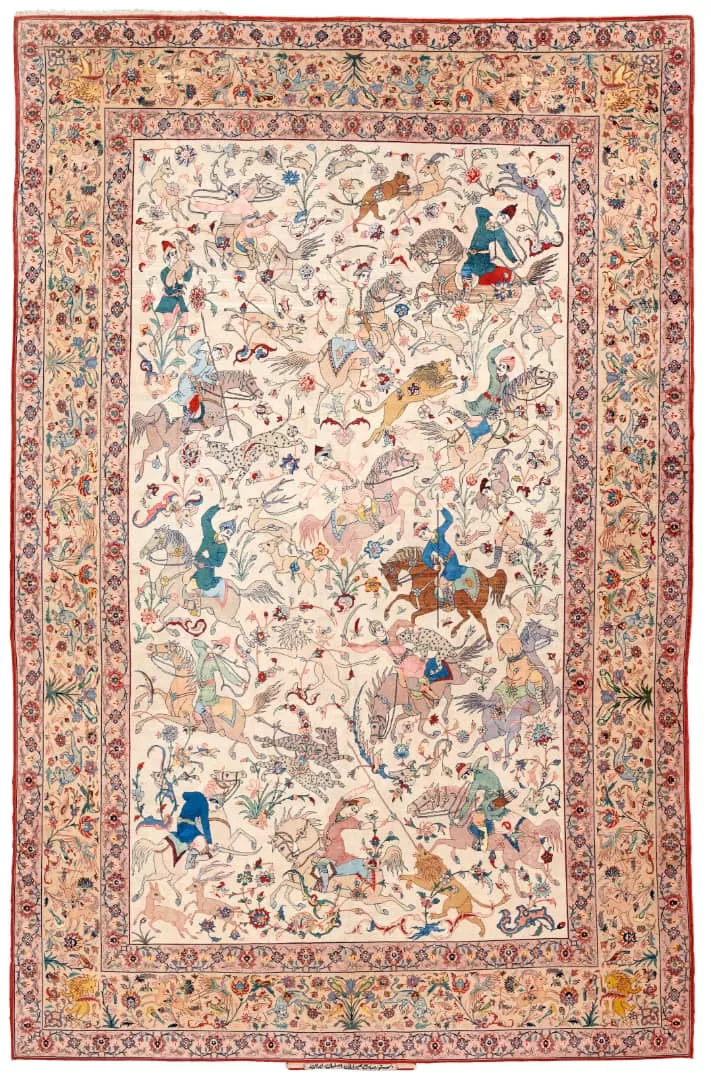
User comments
0 Comment
Post your comment